

Imagine waking up at two in the morning to a damp bed and a person you care for who feels embarrassed and uncomfortable. You see this play out in homes across Australia every single night, often more than once.
So, how do you stop it from happening again tomorrow? Ontex Healthcare will walk you through mattress protector placement, lighting, and sound changes that stop leaks from waking anyone up. We’ll also cover when it’s time to see a doctor.
Look, we understand how frustrating disrupted sleep feels, night after night. But if you skip the basics, both of you could end up exhausted and stressed for weeks on end. So, let’s start with the bedroom itself.
Why Overnight Incontinence Care Starts With the Bedroom

A leak at two in the morning means stripping wet sheets while half asleep, then settling the person you care for back down before either of you can rest again. Each interruption cuts into deep sleep, and it ultimately leaves both of you tired, short-tempered, and worse at managing the next change.
Here’s what actually causes the disruption, and why the bedroom setup makes such a difference:
- A wet mattress wakes someone within minutes, every time.
- Damp sheets against skin cause itching and restlessness.
- Cold, wet fabric drops body temperature fast overnight.
- Changing sheets at 3 a.m. feels exhausting and undignified (we’ve all been there).
None of these problems is permanent. A properly set-up bedroom stops most leaks from turning into a full wake-up event, and the rest of the setup gets easier once you sort the basics.
Mattress Protector Placement: Getting the Basics Right
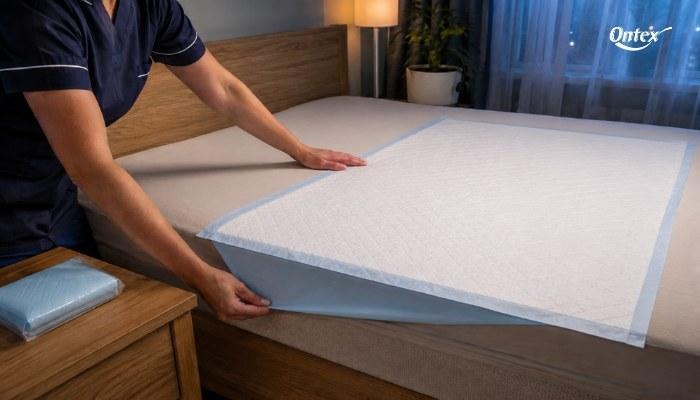
A mattress protector needs full coverage to actually stop leaks from reaching the sheets below. Fitted styles, like the Kylie fitted mattress cover, are the safe bet here because they stay tucked at all four corners instead of sliding during movement. Sizing counts too, so check whether the bed is single, king single, double, or queen before buying.
Through our practical knowledge helping families set up overnight care, we’ve seen flat protectors slide halfway off within hours. Layering a fitted protector with an absorbent pad on top adds a second barrier that catches what the sheet alone can’t hold.
Fair warning, though: a protector fitted correctly still needs a weekly wash at 65°C to clear bacteria and stop odour building up. Skip fabric softener, since it breaks down the waterproof layer over time.
Incontinence Products for Overnight Use: What Helps Most
If you choose the right product, you’ll deal with far fewer changes and a lot more uninterrupted sleep. By right, we mean one matched to absorbency needs and body size, not just whatever’s on the shelf. Let’s break down what actually counts overnight.
- Higher Absorbency Levels: Overnight products like iD Pants Super hold up to 1,870ml, compared to around 1,045ml in standard daytime pants. That extra capacity means fewer wake-ups just to change a pad.
- Correct Sizing Counts: Sizes run by waist measurement, from around 80cm up to 170cm or more, so check this before buying (annoying, but necessary). Getting this wrong is often the real cause behind leaks, not the product itself.
- Breathable Materials: Cotton-feel back sheets reduce skin irritation during eight or more hours of continuous wear. On top of comfort, this also lowers the risk of rashes forming overnight.
- Odour Control Features: Some pads include a double wetness indicator line, which can be helpful to know when a change is due to avoid bad odour. So, there’s less guesswork involved in the middle of the night.
Remember that getting sizing and absorbency right takes a bit of trial and error at first. Once you find what suits the person you’re caring for, night changes become far more manageable.
Small Bedroom Adjustments That Prevent Wake-Ups
Below, we’ll learn about the smaller room details that decide whether the night stays quiet or gets interrupted. These adjustments take less than an hour to set up, and they support a calmer overnight incontinence care routine once the basics are already sorted.
Lighting: Soft, Low-Glow Options for Night Changes
Bright overhead lights abruptly wake people during a night change, often more than the leak itself. A dim, warm-toned nightlight (say, a blue dim light of 15 watts) near the bed gives you enough light to manage a change safely, without the shock of a full switch flick.
Motion-sensor plug-in lights work well here too, since they turn on automatically and switch off once you’re done. It effectively protects the sleeper’s sound sleep for the rest of the night.
Sound: Quiet Fabrics and Movement-Friendly Setups
Ever notice how a crinkling sheet sounds louder at three in the morning than it does at noon? Waterproof layers under a fitted sheet reduce that rustle, and softer, quilted fabric moves quietly under weight.
Keep an eye on squeaky bed frames as well, since a few drops of oil on the joints solve that problem in minutes.
Temperature: Keeping the Room Comfortable All Night
Keep the room at a steady 18 to 21 degrees, and the body stays comfortable enough to sleep through the night without stirring. Cold air makes damp skin feel worse, while overheated rooms cause sweat to build up under the sheets and mattress protector.
Pro Tip: A simple room thermometer takes the guesswork out of finding that balance.
Layout: Easy Access Without Disturbing Sleep
Supplies within arm’s reach mean you can manage a change without switching on the main light or leaving the room. From what we’ve seen across many home care setups, a small bedside caddy with spare pads, a spare protector, and a fresh sheet saves several minutes per change.
Spare sets also mean one load in the machine covers several nights at once. This approach keeps dust and moisture from building up in unwashed linen.
What if Urinary Incontinence Needs More Than a Bedroom Fix?
Sometimes, it’s a must to look beyond the bedroom setup entirely. Frequent leaks despite a good setup can point to something worth checking with a doctor (sooner rather than later). Common causes include weak pelvic muscles, certain medicines, constipation, and in older people, conditions linked to reduced bladder control.
Let’s be real here: a well-set-up bedroom only manages the symptom. It doesn’t treat what’s causing the leaks in the first place. A GP or continence nurse can check for underlying issues and suggest treatment options, which can be related to pelvic floor exercises or prescribed medicines.
However, none of this means starting over. Bedroom setup and professional advice work well together. One handles the nights, the other handles the cause.
Ready to Make Overnight Care a Little Easier?
A few small changes tonight can mean a calmer, less disrupted night for both of you. You don’t need to overhaul the whole bedroom at once, either.
Start with one adjustment this week, then build from there:
- Fit a proper mattress protector under the sheets
- Swap harsh overhead lighting for a dim nightlight
- Choose an overnight product with the right absorbency and size
- Check in with a doctor if leaks keep happening despite these changes
At the end of the day, a well-set-up bedroom supports better sleep for everyone in the house. Ontex Healthcare has a full range of protectors and continence aids built to help you get there.


